
The Complete Guide to Epoxy Flooring and Concrete Finishes
March 24, 2026
Epoxy flooring and concrete finishes have become increasingly popular in both residential and commercial settings due to their durability, aesthetic appeal, and low maintenance requirements. Whether in industrial warehouses, modern offices, or high-traffic homes, these flooring solutions provide a seamless, long-lasting surface that can withstand heavy use while enhancing the overall environment. Beyond mere functionality, these floors also contribute to safety by reducing slip hazards and improving visibility with reflective surfaces. As such, selecting the right flooring system is not only an investment in aesthetics but also in operational efficiency and long-term performance. Understanding the nuances of epoxy flooring and various concrete finishes is essential for property owners, contractors, and interior designers aiming to make informed decisions about flooring investments.
With a variety of finishes, textures, and applications available, these surfaces can be customized to meet specific design and functional needs. From high-gloss, reflective epoxy coatings to decorative concrete stains and polished concrete, the options are versatile and adaptable to almost any project. Additionally, these flooring systems offer opportunities for creative expression, including metallic effects, multicolored flakes, and intricate patterns that complement modern interior design trends.
Moreover, advances in technology and materials have improved the lifespan and performance of these floors, making them a preferred choice for those seeking quality, durability, and style. This guide explores the different types of epoxy and concrete finishes, their benefits, installation processes, challenges, and best practices, offering a comprehensive resource to help you choose the right solution for your space.
Understanding Epoxy Flooring
What is Epoxy Flooring?
Epoxy flooring is a polymer-based coating applied over concrete substrates to create a protective, durable, and visually appealing surface. The system typically consists of two components: a resin and a hardener, which, when combined, form a rigid plastic material that bonds tightly to the existing concrete. This bond ensures excellent adhesion and resistance to wear, chemicals, and moisture. Epoxy is versatile, available in a wide range of colors, textures, and finishes, making it suitable for both functional and decorative applications.
Benefits of Epoxy Flooring
- Durability – Epoxy coatings are resistant to scratches, heavy foot traffic, and industrial machinery, making them ideal for warehouses, garages, and retail spaces.
- Chemical Resistance – Many epoxy formulations withstand oils, acids, and cleaning agents, reducing maintenance challenges.
- Aesthetic Flexibility – With customizable colors, patterns, and metallic effects, epoxy can match modern or industrial design themes.
- Safety Features – Textured epoxy floors can enhance slip resistance, while high-gloss finishes improve lighting in workspaces by reflecting light.
Common Applications
Epoxy floors are frequently used in:
- Industrial environments such as manufacturing plants and warehouses.
- Commercial spaces like showrooms, hospitals, and offices.
- Residential areas including garages, basements, and kitchens.
Challenges of Epoxy Flooring
While epoxy is highly durable, it has limitations: improper surface preparation can cause peeling or bubbling, UV exposure can yellow certain formulations, and extreme temperature fluctuations may affect adhesion. Selecting the correct product and professional installation is key to long-term performance.
Types of Epoxy Flooring Systems
Self-Leveling Epoxy
Self-leveling epoxy is a smooth, seamless coating that creates a high-gloss finish ideal for contemporary interiors or commercial settings. It flows evenly over the surface, filling minor imperfections in the concrete substrate. This type is highly suitable for areas where aesthetics and easy cleaning are priorities.
Epoxy Flake Flooring
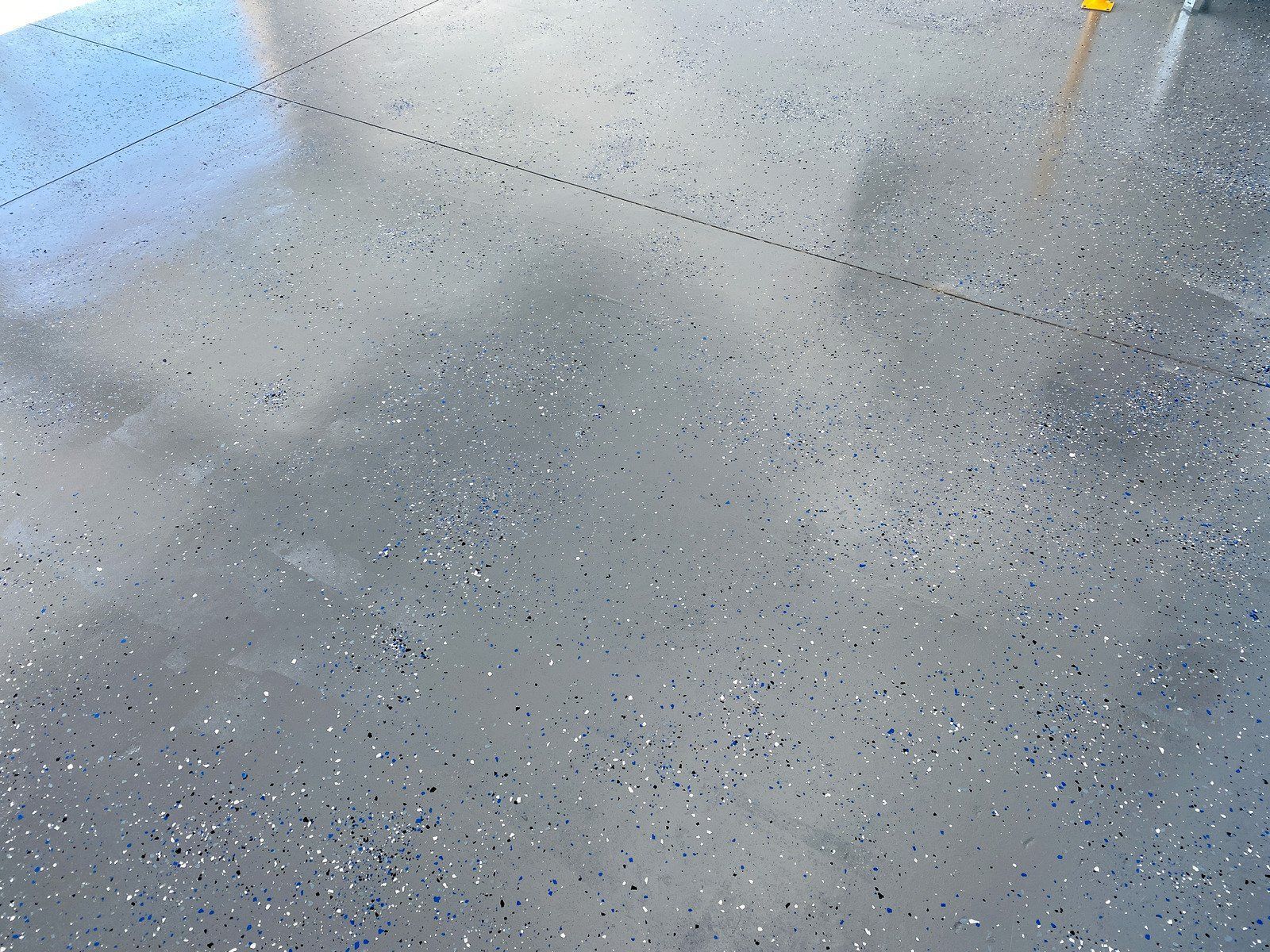
Flake epoxy includes colored flakes broadcast onto a base epoxy coat, creating a textured, decorative surface. This system is commonly used in garages, retail spaces, and laboratories, offering both slip resistance and aesthetic appeal. The flakes come in various sizes and colors, allowing custom patterns and designs.
Metallic Epoxy
Metallic epoxy creates a luxurious, marbled effect by blending metallic pigments with epoxy resin. Popular in high-end residential spaces, showrooms, and commercial lobbies, this finish offers a unique, reflective surface that mimics stone or water-like patterns.
Epoxy Mortar Systems
Epoxy mortar combines epoxy resin with aggregates, producing a thicker, more durable surface ideal for heavy-duty industrial floors. This system resists impact, chemical spills, and thermal shock, making it a preferred choice for factories and production facilities.
Installation Considerations
Epoxy installation requires proper surface preparation, including cleaning, patching, and possibly etching or grinding concrete. Temperature, humidity, and mixing ratios must be carefully managed to ensure optimal adhesion and curing. A professional installer can prevent common issues such as bubbling, peeling, or uneven application.
Exploring Concrete Finishes
Polished Concrete
Polished concrete involves grinding the concrete surface to a smooth, reflective finish using progressively finer diamond abrasives. The process not only enhances appearance but also increases surface density, making it more resistant to wear and easier to maintain. Polished concrete is ideal for commercial buildings, airports, and high-traffic residential spaces.
Stained Concrete
Concrete staining adds color and vibrancy to otherwise plain floors. Acid-based stains react chemically with concrete minerals to create a translucent, variegated effect, while water-based stains offer a wider color palette and more uniform coverage. Stained concrete is often used in decorative flooring, patios, and artistic installations.
Microtopping and Overlay Finishes
Concrete microtoppings and overlays involve applying a thin layer of specialized cement-based material over an existing concrete floor. These finishes can be customized with colors, textures, and patterns, providing a cost-effective way to refresh worn surfaces. They are especially useful in commercial spaces, restaurants, and residential renovations.
Exposed Aggregate Concrete
Exposed aggregate surfaces reveal the natural textures of stones or pebbles embedded in the concrete. This finish is often used for exterior pathways, driveways, and patios, offering a visually appealing, slip-resistant surface that blends well with outdoor landscaping.
Benefits of Decorative Concrete Finishes
- Durability – Concrete finishes withstand heavy use and outdoor elements.
- Design Versatility – Multiple techniques allow for unique aesthetics, from industrial to luxurious looks.
- Low Maintenance – Polished and sealed surfaces require minimal cleaning compared to other flooring types.
- Cost-Effective – Decorative overlays and stains can be more budget-friendly than natural stone or tiles.
Challenges
Concrete finishes require proper sealing to prevent stains and moisture penetration. Polishing and staining demand professional skill to achieve uniform results, and surface preparation is critical to avoid cracks, dusting, or uneven color.
Best Practices for Epoxy and Concrete Flooring
Proper Surface Preparation
One of the most critical steps is preparing the substrate. Concrete must be clean, dry, and free from oils, adhesives, or loose particles. Mechanical grinding or shot blasting ensures a rough surface profile for better adhesion, particularly with epoxy coatings.
Moisture Testing
Before installing epoxy or decorative overlays, testing for moisture vapor transmission is essential. Excess moisture can prevent adhesion, cause bubbling, and reduce the lifespan of the coating. Moisture mitigation systems may be necessary in basements or slabs-on-grade.
Choosing the Right System
Select flooring systems based on traffic, chemical exposure, aesthetics, and budget. Heavy industrial zones benefit from epoxy mortar, while residential garages might only require a flake epoxy system. Decorative concrete finishes can be tailored to outdoor or indoor applications for aesthetic impact.
Application Techniques
Follow manufacturer instructions for mixing ratios, curing times, and environmental conditions. Use rollers, squeegees, or trowels appropriately for each type of flooring. Layering may be required for flake or metallic epoxy systems to achieve the desired finish.
Regular Maintenance
Routine cleaning and periodic resealing help preserve the look and durability of both epoxy and concrete finishes. Avoid abrasive cleaning tools that can scratch or dull the surface. Proper maintenance ensures long-term value and performance.
Real-World Applications and Case Studies
Industrial Environments
In manufacturing plants and warehouses, epoxy flooring protects concrete from heavy machinery, chemical spills, and daily wear. Self-leveling epoxy creates a seamless, easy-to-clean surface, while epoxy mortar systems provide exceptional durability in high-impact areas.
Residential Settings
Homeowners increasingly choose epoxy and decorative concrete for garages, basements, and kitchens. Flake epoxy adds color and slip resistance, while stained concrete and polished finishes provide elegant, low-maintenance alternatives to traditional flooring.
Commercial and Retail Spaces
Polished concrete and metallic epoxy enhance aesthetics and durability in retail stores, showrooms, and offices. Reflective surfaces improve lighting, reduce energy costs, and create a modern, professional atmosphere. Stained or microtopped concrete adds design versatility for restaurants and boutique spaces.
Outdoor Applications
Exposed aggregate and stained concrete are frequently used for patios, walkways, and pool decks. These finishes combine beauty with functionality, offering slip resistance, durability, and long-term performance in varying weather conditions.
Trusted Experts Delivering Exceptional Flooring Solutions
Epoxy flooring and concrete finishes offer unmatched versatility, durability, and aesthetic potential across industrial, commercial, and residential spaces. From protective epoxy coatings in factories to polished or stained concrete in modern homes, these flooring solutions meet functional requirements while elevating visual appeal. Understanding the different systems, their applications, benefits, and challenges is crucial to achieving long-lasting, high-performance results.
At J&M Painting Services, we bring over 35
years of experience in interior and exterior projects across Litchfield Park and Maricopa County, Arizona. Our expertise extends to professional epoxy and concrete floor finishes, ensuring surfaces that are both visually striking and exceptionally durable. We prioritize proper preparation, quality materials, and precise application to deliver long-lasting results tailored to each client’s needs. Whether you’re enhancing a residential garage, a commercial facility, or a high-traffic industrial space, our team combines technical skill with attention to detail, providing reliable, professional service. Trust us to transform your floors with expert care, elevating both the functionality and aesthetics of your property.