
Dated Oak Cabinets Dragging Down the Kitchen? How a Repaint Brings Them Current
September 18, 2026
QUICK ANSWER: Honey-oak cabinets read as dated because of two things working together: a warm orange undertone that clashes with newer countertops and flooring, and a heavy, ridged grain pattern that was popular decades ago and now looks distinctly of its era. Repainting solves both problems by degreasing and sanding the surface, choosing whether to fill or leave the grain, applying a stain-blocking primer that keeps oak's natural tannins from bleeding through, and finishing with a durable topcoat applied by spray or careful hand-brushing. Done correctly, a repainted oak kitchen holds up for years rather than months, and it avoids the disruption of a full cabinet replacement.
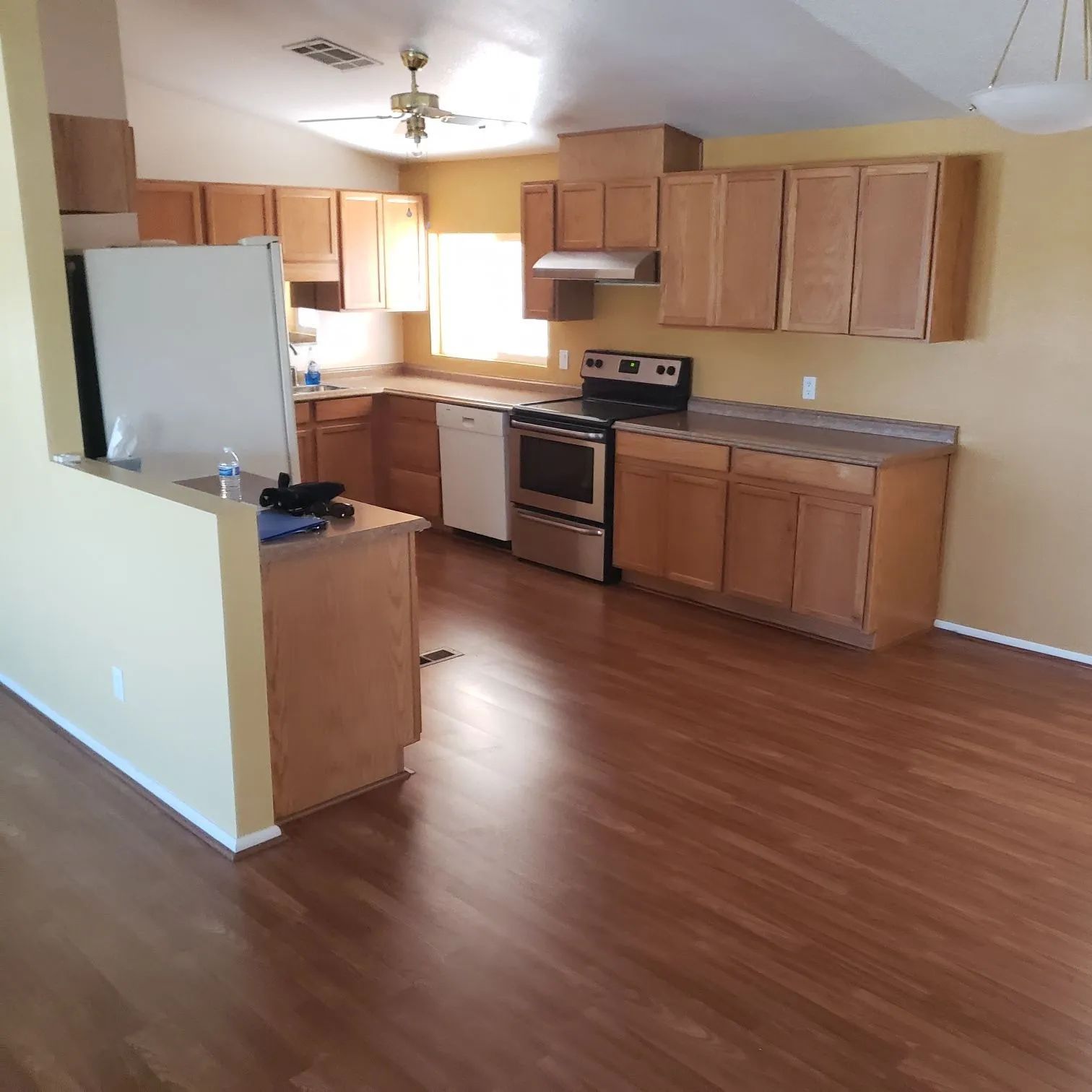
You redid the countertops. New backsplash tile went in last spring. The floor was refinished. And somehow the kitchen still looks stuck in the past, because the cabinets are the same honey-orange oak that came with the house, grain lines running across every door like a topographic map. It's the one piece nobody updated, and it's the piece that's dragging the whole room backward.
But oak cabinets from certain building eras get a bad reputation they don't fully deserve. The wood itself is solid and often in fine structural shape decades later — it's the finish and the color that have aged out. Before ripping out cabinet boxes that still work fine mechanically, here's what a proper repaint actually does, because the process runs deeper than a quick coat of white and a set of new knobs.
Why Honey Oak Reads as Dated No Matter What Else Changes
The Undertone Fights Everything Around It
Original oak stain finishes lean warm, often shading into orange or amber depending on the specific stain and topcoat used at the time. Modern countertop materials, tile, and flooring trend cooler and more neutral, and that mismatch is what a homeowner is actually noticing when a kitchen feels "off" even after other updates. The cabinets aren't damaged. They're working against a different color story than the rest of the room now tells.
The Grain Pattern Reads As An Era, Not Just A Wood Species
Oak has a naturally open, prominent grain, and when it was cut and finished in a certain style — often with a heavier stain to emphasize the ridges — that combination became strongly associated with a specific period of kitchen design. Maple, cherry, and painted MDF cabinets from the same years don't carry the same dated signal nearly as strongly, because the grain itself isn't doing the work of aging the room.
Hardware And Sheen Age A Kitchen Independently Of The Cabinet Material
Brass hinges and pulls, a glossy factory lacquer that's yellowed with UV exposure through a kitchen window, and visible tool marks in the corners of raised-panel doors all stack on top of the color and grain issue. None of that means the cabinet boxes or doors need to go. It means the finish system on top of them needs to change.
What Repainting Oak Actually Involves, Step by Step
Degreasing comes before any sanding touches the surface. Kitchen cabinets accumulate a thin film of cooking oil and airborne grease over years, concentrated most heavily around the range and any door that gets touched with cooking-prep hands. Sanding straight over that film just polishes it into the wood rather than removing it, which is why cabinets that look freshly painted at first often start peeling in sheets around handles and vent areas within a matter of months. A degreasing wash, then a scuff-sand to break the factory sheen and give the primer something to grip, is the order that actually works.
The grain gets a decision, not a default. Oak's ridged texture can be filled with a wood-grain filler and sanded smooth for a flatter, more contemporary look that hides the fact the cabinets were ever oak at all, or it can be left as-is and simply painted over, which keeps some visible texture under the new color. Neither approach is wrong — it depends on whether the goal is a perfectly smooth, factory-style finish or a slightly more traditional painted-wood look. What matters is that this gets decided before primer goes on, since filling grain after the fact means redoing the finish.
Primer choice is what prevents having to do the job twice. Oak contains natural tannins, and those tannins can migrate up through a standard latex topcoat over the days and weeks after painting, showing up as faint yellow-brown shadows or streaks — usually right around knots, along grain lines, or near any spot where moisture got into the wood at some point. A stain-blocking, bleed-resistant primer formulated specifically for tannic woods stops that migration before it starts. Skipping straight to a general-purpose primer on oak is one of the more common reasons a cabinet repaint looks perfect on install day and disappointing a month later.
Spray application produces the most even, factory-style result, but a skilled hand-brushed finish holds up too.
Spraying lays down thin, consistent coats without brush marks or roller texture, which is why cabinet shops and factories rely on it for that glass-smooth look. On-site spraying requires doors to be removed, boxes and surrounding surfaces masked off completely, and enough airflow and dry time between coats to avoid dust settling into wet paint. A careful brush-and-roller approach, using thin coats and light sanding between them, can produce a comparably durable result — the finish quality has more to do with technique and patience than with which tool applied it.
TIP: Test any new primer on the inside of a door or the back of a drawer front — somewhere that won't show — and let it sit undisturbed for a full 48 hours before topcoating. Tannin bleed-through doesn't always show up immediately, and a five-minute test patch is a lot less trouble than repainting a full kitchen of doors after the fact.
Why the Desert Climate Changes How This Job Gets Handled
Arizona's dry air adds a variable that a lot of general painting advice skips over entirely. Solid wood loses moisture fast in low humidity, and it loses it unevenly — the surface dries and contracts before the core does, which builds internal stress right at the joints where a door's stiles and rails meet. Over enough dry seasons, that stress shows up as fine hairline separations at the corners of a cabinet door, especially on doors with a solid-wood center panel that has nowhere to move.
That's part of why a lot of cabinet doors, oak included, are built with a "floating" center panel set into a grooved frame rather than glued rigid on all sides — the panel can expand and contract slightly with the seasons without cracking the finish along with it. A repaint doesn't change that construction, but it does mean the finish going on needs to be flexible
enough to move with the wood rather than sitting on top of it like a hard shell that splits the moment the panel shifts. This is one more reason the primer and topcoat system matters as much as the color choice, especially in a west-facing kitchen catching direct afternoon sun through a window, where the cabinet boxes themselves swing in temperature every single day.
What a Properly Repainted Kitchen Actually Holds Up To
A
cabinet finish system built for the job — degreased and properly prepped surfaces, a tannin-blocking primer suited to oak, and a hard, durable topcoat cured for the full recommended time before doors go back on their hinges — resists the daily wear a kitchen throws at it: grease film near the range, water splashes at the sink cabinet, and the constant hand contact around pulls and edges. That durability is what separates a repaint that looks good for a season from one that holds its finish for years.
WARNING: Rehanging doors and loading drawers back in before the topcoat has fully cured is one of the fastest ways to undo good prep work. Most cabinet-grade coatings feel dry to the touch within hours but need considerably longer to reach full hardness, and doors closed against their frames or drawers stacked with dishes before that point can leave soft dents, sticking spots, or witness marks that weren't a factor in the first weeks of daily use.
Color matching and hardware updates round out the change without touching the wood itself. Swapping dated brass hinges and pulls for a finish that suits the new color, and choosing a sheen — matte, satin, or semi-gloss — that fits how the kitchen actually gets used, are both decisions that happen after the paint work but change how finished the whole room reads. A satin or semi-gloss sheen tends to hold up better to wiping and cleaning around a range and sink than a flat finish does, which is worth factoring in alongside the color itself.
Frequently Asked Questions
Will the oak grain still show through after the cabinets are painted?
It depends on whether the grain was filled before painting. Filled and sanded, the surface reads flat. Left as-is and painted over, some texture remains and may show faintly under the color, depending on sheen.
Do oak cabinets need to be sanded down to bare wood before repainting?
No. A full strip to bare wood is rarely necessary. What matters more is removing grease and buildup, scuffing the existing finish thoroughly so primer can bond, and using a primer suited to tannic wood.
Why do some painted oak cabinets show yellow shadows or streaks months later?
That's always tannin bleed-through, compounds in the oak migrating up through a topcoat not formulated to block them. It surfaces along grain lines, near knots, or where wood held moisture, preventable with the right primer.
Is a sprayed finish always more durable than a brushed one on cabinets?
Not necessarily more durable, but more consistent in appearance. Spraying lays down thin, even coats without brush marks. A hand-applied finish, done with thin coats and light sanding between layers, can hold up as well.
Should cabinet interiors and drawer boxes be repainted along with the doors?
Interiors are often left as-is unless visibly worn, since the goal is usually updating what's seen most. Drawer boxes and shelves can be included if the whole kitchen gets refreshed, without affecting the doors' finish.
How soon can cabinets go back into normal daily use after repainting?
Doors feel dry within a day, but full hardness takes longer to develop. Hanging doors and reloading drawers before that curing window closes is a common way fresh paint picks up dents or sticking spots.
Oak Cabinets Were Never the Real Problem
Honey oak cabinets were never the flaw in an otherwise updated kitchen. What actually aged was the color and texture sitting on top of solid wood that's usually still in fine shape decades later. Degreasing the surface, blocking tannin bleed-through with the right primer, and finishing with a coat that can move through dry-climate temperature swings closes that gap. Once that finish system is done properly, the cabinets stop reading as the one detail still stuck in an earlier decade.
J&M Painting Services
has been doing this kind of work across Litchfield Park and Maricopa County for more than 35
years, long enough to know exactly how oak behaves once the desert dry season sets in and how a finish needs to be built to hold through it. That kind of experience is what turns a repaint from a quick color change into something a kitchen keeps looking right with for years, long after the first coat has fully cured.