
Garage Floor Pitting and Staining in the Heat? How Epoxy Seals It for Good
October 15, 2026
QUICK ANSWER: A pitted, stained garage floor is bare concrete that has soaked up oil, tire residue, and years of heat cycling. Epoxy seals it by bonding to the slab itself, but only after the surface is diamond ground to open the pores, cracks and joints are filled, and moisture is checked. In Arizona, a higher solids epoxy with a UV stable topcoat holds up to hot tires and summer garage temperatures far better than a thin kit coat. The prep decides whether the floor lasts or peels.
You pull into the garage after a July afternoon on the road, and the tires are still hot when you shut the engine off. A few weeks later you notice the dark ring where the front driver side tire always sits. There is an oil spot near the workbench that never fully scrubbed out, a rough, pitted patch by the door where the surface has flaked away, and a hairline crack running toward the drain. You have tried degreaser, a pressure rinse, even a bottle of concrete cleaner from the hardware store. The floor looks the same, or worse.
That is not a cleaning problem. Bare concrete is porous, and a garage slab in the Phoenix area spends years soaking up whatever lands on it while it bakes through daily heat swings. Once oil, tire residue, and moisture have worked their way into the pores, no amount of scrubbing pulls them back out. The lasting fix is to seal the slab with a coating that bonds to it, and that is where epoxy comes in. This guide covers why garage floors pit and stain, what proper epoxy work actually involves, and why the prep matters far more than the coating itself.
Why Garage Concrete Pits and Stains in the First Place
Concrete looks solid, but at the surface it behaves more like a hard sponge. Tiny capillary pores run through the top layer of the slab, and anything liquid can wick into them. Motor oil, transmission fluid, brake fluid, antifreeze, and the plasticizers that migrate off hot tires all find their way in. Once they are down in the pores, they discolor the concrete from the inside, which is why stains stay put after you scrub the top.
Pitting Comes From Surface Wear And Weak Paste
The slab’s top layer weakens through poor finishing, moisture, salts, and abrasion. Tracked-in grit grinds away damaged areas, creating pits that collect dirt, oil, and debris.
Heat Makes Everything Move Faster
Garage temperatures rise sharply during summer, causing concrete to expand and contract repeatedly. Over time, these cycles widen control joints and hairline cracks, allowing oil and moisture inside.
Tires Leave Their Own Kind Of Damage
Hot tires deposit oils and plasticizers onto garage floors. Silicone-based tire dressings can prevent coatings from bonding properly, making parking areas especially vulnerable to staining and coating failure.
What Epoxy Actually Does to a Concrete Floor
Epoxy is a two part system. A resin and a hardener are mixed together, and they react chemically to form a hard, dense, plastic like film. Applied correctly over a properly prepared slab, that film fills and bridges the pores and surface irregularities, locks in what is left in the concrete, and gives you a continuous surface that resists oil, fluids, and tire marks. Because the cured surface is non porous, spills sit on top instead of soaking in, and a mop or squeegee handles most cleanup.
The important detail is the word bond. Epoxy does not simply sit on a floor like paint on a wall. It grips the concrete mechanically, locking into the texture of the surface. If that texture is not there, the coating has nothing to hold, and it eventually lifts. That single fact explains most of the garage floor failures you see on neighborhood forums and in the garages of homes that were flipped.
TIP: Try the water drop test on your own floor. Sprinkle a little water on a clean section of bare concrete. If it soaks in within about twenty seconds, the surface is open enough to take a coating. If the water beads up, the slab is sealed, slick, or contaminated, and it needs mechanical prep before anything will stick to it. Check the tire parking spots separately, since residue there can make the concrete behave differently from the rest of the floor.
Why Prep Decides Whether the Floor Lasts
A good epoxy job is mostly preparation. The coating itself goes on in a day or less of working time, but the steps before it are what determine whether the floor looks the same in ten years or starts peeling in the second summer.
Diamond Grinding Opens The Surface
Professionals use diamond grinders to remove old coatings, sealers, contaminants, and weak concrete, leaving a consistent texture for epoxy adhesion. Grinding also removes contaminated surface layers that ordinary cleaning cannot reach, improving the coating’s chances of lasting.
Acid Etching Is A Weaker Substitute
Acid etching can roughen clean, bare concrete but cannot effectively remove oil, tire dressing, silicone, or existing coatings. It also requires thorough rinsing, neutralization, and drying. Grinding provides more consistent surface preparation for durable epoxy flooring.
Stains And Oil Spots Get Special Attention
Deep oil contamination can seep through finished coatings. Professionals grind affected areas, apply degreasers, and sometimes use penetrating or oil-resistant primers before coating. This preparation helps prevent stubborn stains from resurfacing and damaging the finished floor.
Cracks And Joints Are Repaired Before Coating
Unrepaired cracks often reappear through epoxy. Professionals fill structural cracks with bonding repair materials, then grind them flush. Control joints receive semi-rigid fillers, creating smooth surfaces while accommodating movement. Proper repairs reduce recurring cracks and coating damage.
Pits And Spalled Spots Are Filled And Leveled
Repair mortars or fillers restore shallow pits and damaged concrete before grinding or sanding surfaces flush. This creates a smoother foundation for epoxy, preventing the finished coating from reflecting every depression and rough patch across the garage floor.
WARNING: Do not coat over a slab with unchecked moisture. Concrete releases moisture vapor from below, and epoxy forms a tight film that traps it. That trapped vapor is a leading cause of bubbles, blistering, and peeling. Moisture testing before application, plus a penetrating sealer or moisture tolerant primer where the slab calls for it, is far cheaper in time and effort than recoating a floor that has lifted.
Heat, Hot Tires, and Why Arizona Needs a Better System
Arizona garages ask more from a coating than most places in the country. The slab, the air, and the tires are all hotter, and the coating has to cope with all three.
Hot Tire Pickup Is The Classic Failure
Hot tires transfer heat to epoxy, and cooling tires can grip and pull up weakened coatings. Professional-grade systems, proper primers, and thorough surface preparation improve adhesion and resist tire-related damage.
Pot Life And Temperature Matter During The Install
Epoxy starts curing immediately after mixing, and high temperatures shorten working time. Experienced installers use smaller batches and schedule applications during cooler periods to prevent bubbles, lap marks, and uneven coverage.
UV Exposure Is A Quiet Problem
Sunlight entering open garage doors can cause standard epoxy to yellow over time. A UV-stable topcoat helps preserve the floor’s original color and gloss, especially near sunlit garage entrances.
TIP: Let hot tires cool for a few minutes with the door open before closing up the garage on a summer afternoon, and avoid putting foam or synthetic backed mats directly on a freshly coated floor. Some backing materials can stick to the coating and leave dark marks.
What a Sealed Floor Looks and Feels Like Afterward
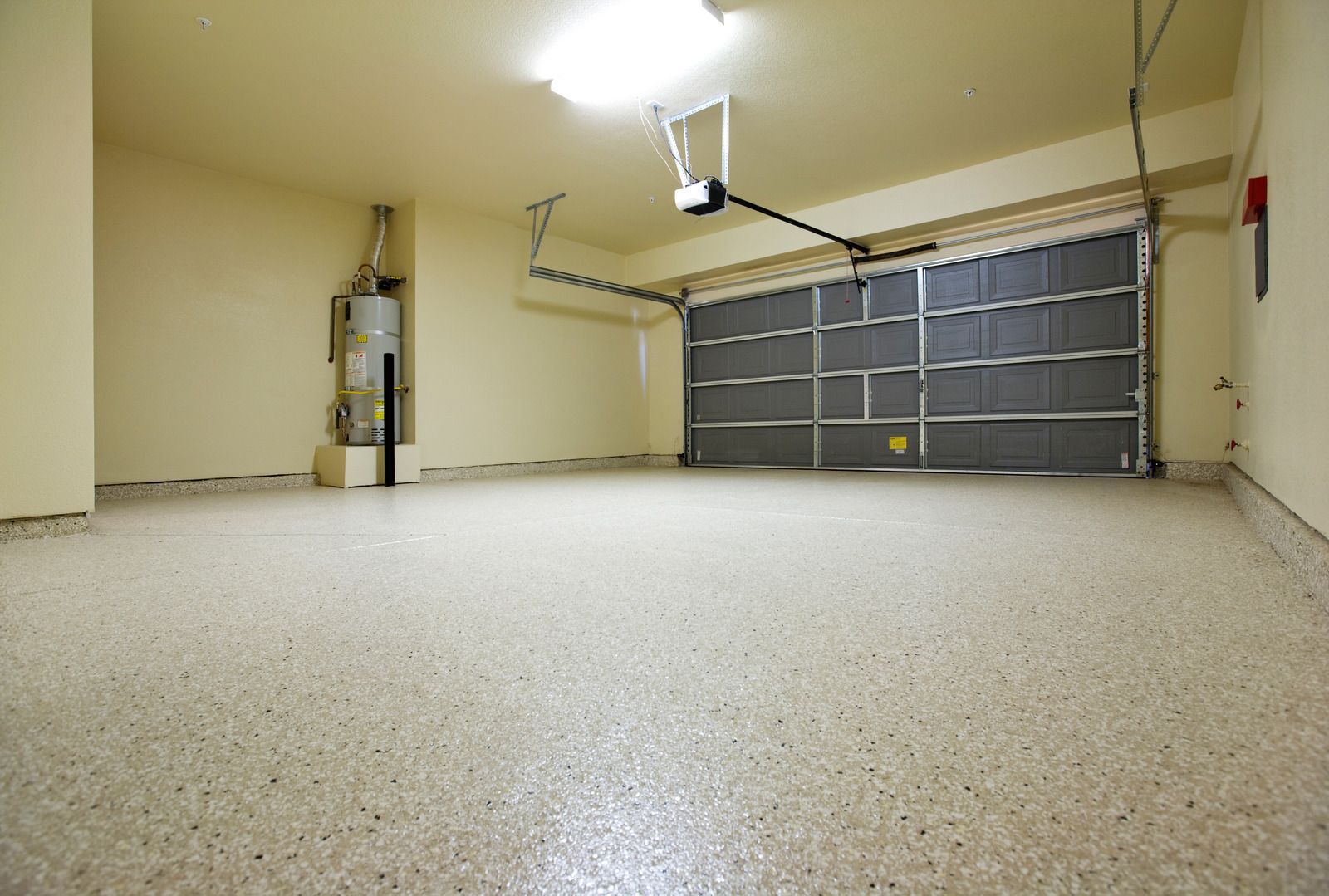
Once the slab has been ground, repaired, and coated, the change is easy to see and easy to feel. The pits and rough patches are filled and leveled, so the surface is smooth and even. The oil stains are covered and sealed, so the floor reads as a single clean color instead of a map of past leaks. Cleanup becomes a matter of sweeping and mopping with a mild cleaner, because the film on top does not soak up spills the way bare concrete does.
You can also choose how the floor looks and performs. Decorative flake broadcasts add color and hide small imperfections, and they give the floor a textured surface that helps with traction. Solid color systems have a clean, uniform finish. A topcoat can be added for added scratch and chemical resistance, and non slip additives can be included where the floor gets wet, such as near a wash area or a garage door where rain blows in during monsoon season.
For a typical residential two car garage, the work usually runs about two to three days, which allows time for grinding, repair, the coating layers, and the first cure. The floor then needs a short period before it takes light foot traffic and a longer period before it handles the full weight of vehicles, so it helps to plan around when the cars need to be parked back inside.
Frequently Asked Questions
Can epoxy cover a floor that is already pitted and cracked?
Yes, after repairs. Cracks are filled, pits are patched and leveled, and the surface is ground for grip. Epoxy over open damage shows every flaw and often fails there.
Will old oil stains bleed back through the epoxy?
Heavy oil can migrate back up, so stained areas get extra care. Grinding removes much of the contaminated layer, and an oil resistant primer treats the worst spots before coating.
Why does epoxy sometimes peel up where the tires park?
Usually hot tire pickup. The coating may be thin with low heat tolerance, the concrete may lack proper profiling, or tire residue stayed on the slab. Professional systems over ground concrete hold up better.
Is acid etching good enough to prepare a garage floor?
It can work on clean, bare concrete, but it leaves oil and silicone behind and is less consistent than grinding. On previously sealed or painted floors, it rarely creates enough profile.
How do I know if moisture is a problem in my slab?
A surface moisture test before coating shows whether vapor is rising. Damp patches, white powder, or earlier bubbling coatings are warning signs. If present, add a penetrating sealer or moisture tolerant primer.
How long should I wait before parking back in the garage?
Light foot traffic is usually fine after a short cure, but vehicles need longer for full hardness. Parking too early can leave tire marks, so follow your installer’s schedule.
Sealing Your Garage Floor Against Heat and Stains
A stained, pitted garage floor is simply what porous concrete becomes after years of hot tires, oil, and daily temperature swings. Lasting results come from treating the slab in the right order: grind it to the proper texture, repair the cracks and pits, check for moisture, and then apply a coating built for desert heat. When those steps happen in sequence, the surface stays smooth, sealed, and easy to clean, and the dark rings under the tires stop being part of everyday life.
J&M Painting Services
has prepared and coated concrete in Litchfield Park and across Maricopa County, AZ for 35+ years, and that experience shapes every floor. Knowing how summer heat shortens working time, how tire residue affects bonding, and how slabs react to moisture helps the crew plan each step with care. The result is a floor that bonds tightly, resists hot tire pickup, and keeps its clean, even finish through many seasons of heavy garage use.